
When concrete is damaged beyond a simple patch or standard epoxy coating, epoxy mortar is often the best solution. It is one of the strongest flooring systems available and is designed for facilities that demand exceptional durability.
From manufacturing plants and warehouses to food processing facilities and commercial buildings, epoxy mortar creates a surface that can handle heavy traffic, impact, and years of abuse.
If you’re considering a new industrial floor or repairing damaged concrete, here’s what you should know about epoxy mortar and why it’s trusted in some of the toughest environments.
What Is Epoxy Mortar?
Epoxy mortar is a high-strength flooring system made by combining epoxy resin with specially graded aggregates, such as silica sand or quartz. 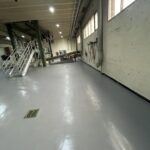
Unlike standard epoxy coatings that are applied in thin layers, epoxy mortar is installed much thicker. It becomes a structural part of the floor rather than simply a protective coating.
The finished surface is extremely dense, durable, and resistant to wear.
Because of its strength, epoxy mortar is often used to rebuild damaged concrete before decorative or protective flooring systems are installed on top.
How Epoxy Mortar Differs From Standard Epoxy
Many people hear the word “epoxy” and assume every flooring system is the same.
They’re not.
A traditional epoxy coating is designed primarily to protect the surface of concrete while improving appearance.
Epoxy mortar serves a different purpose.
It can restore heavily damaged concrete, repair deep surface defects, and create a floor capable of handling significant abuse.
Think of standard epoxy as paint for protection.
Think of epoxy mortar as rebuilding the concrete itself.
When Is Epoxy Mortar the Right Choice?
Not every project requires an epoxy mortar system.
However, it becomes an excellent option when the existing concrete has serious problems or when the finished floor will see constant heavy use.
Common applications include:
- Manufacturing facilities
- Industrial warehouses
- Commercial kitchens
- Food processing plants
- Distribution centers
- Automotive facilities
- Maintenance shops
- Aircraft hangars
- Chemical processing facilities
It is also frequently used when old concrete has extensive cracking, spalling, or surface deterioration.
Repairing Damaged Concrete
One of the biggest advantages of epoxy mortar is its ability to restore damaged slabs.
Concrete naturally deteriorates over time.
Heavy forklifts, dropped equipment, chemical exposure, freeze-thaw cycles, and years of traffic all take their toll.
Instead of removing and replacing an entire slab, epoxy mortar can often rebuild damaged areas while creating a stronger finished surface.
This saves time, reduces downtime, and can significantly lower project costs.
Exceptional Compressive Strength
Industrial facilities need floors that can support more than foot traffic.
Heavy equipment, pallet jacks, forklifts, storage racks, and machinery place enormous stress on concrete.
Epoxy mortar systems offer extremely high compressive strength, often exceeding that of the original concrete slab.
This makes them ideal for facilities where durability is the highest priority.
Outstanding Impact Resistance
Dropped tools happen.
Heavy equipment gets moved.
Materials fall.
Standard coatings can chip or crack under repeated impact.
Epoxy mortar is designed to absorb these conditions far better than thinner flooring systems.
That added strength helps reduce maintenance costs over the life of the floor.
Chemical Resistance
Many industrial environments expose floors to harsh chemicals, oils, fuels, solvents, cleaning agents, and other contaminants.
Depending on the formulation, epoxy mortar provides excellent resistance to many of these substances.
This helps protect both the flooring system and the underlying concrete from long-term damage.
Selecting the right system depends on the specific chemicals used within the facility, which is why every project should begin with a thorough evaluation.
Fast Return to Service
Facility downtime is expensive.
Many epoxy mortar systems can be installed quickly, allowing businesses to return to normal operations sooner than a full concrete replacement would allow.
Every project is different, but minimizing downtime is often one of the biggest reasons owners choose this flooring system.
Surface Preparation Is Critical
No flooring system performs well without proper preparation.
Even the strongest epoxy mortar cannot compensate for poor installation practices.
Professional installers typically prepare the concrete using shot blasting or diamond grinding to create the proper Concrete Surface Profile (CSP).
This removes contaminants, opens the concrete, and creates the mechanical bond needed for long-term performance.
Skipping proper preparation is one of the leading causes of flooring failures.
Can Epoxy Mortar Be Decorative?
Absolutely.
Although epoxy mortar is primarily selected for strength, it can also serve as the foundation for decorative flooring systems.
Once installed, additional layers can be added, including:
- Solid color epoxy
- Quartz flooring systems
- Decorative broadcast systems
- Metallic epoxy
- High-performance urethane topcoats
This allows facility owners to combine industrial performance with an attractive finished appearance.
Is Epoxy Mortar Better Than Concrete?
They serve different purposes.
Concrete provides the structural foundation of the building.
Epoxy mortar enhances and restores that foundation.
Rather than replacing the slab, epoxy mortar creates an extremely durable wear surface that protects the underlying concrete from future damage.
In many situations, this is a far more cost-effective solution than demolition and replacement.
Maintenance Is Simple
One reason industrial facilities choose epoxy mortar is its low maintenance requirements.
The seamless surface eliminates many places where dirt, dust, and contaminants collect.
Routine maintenance typically includes:
- Regular sweeping
- Dust mopping
- Auto scrubbing
- Prompt cleanup of chemical spills
- Periodic inspections
Simple maintenance helps maximize the lifespan of the flooring system.
Common Industries That Use Epoxy Mortar
Because of its strength, epoxy mortar is used across many industries.
These include:
Manufacturing
Heavy machinery, constant traffic, and demanding production environments require flooring that holds up under pressure.
Food Processing
Many food production facilities need seamless floors that are durable and easy to clean.
Warehousing
Forklift traffic places tremendous stress on concrete floors every day.
Epoxy mortar provides a long-lasting solution.
Automotive
Repair shops, dealerships, and manufacturing facilities benefit from floors that resist chemicals, impacts, and abrasion.
Pharmaceutical Facilities
Many pharmaceutical environments require durable, seamless flooring that supports strict cleanliness standards.
Choosing the Right Flooring Contractor
Installing epoxy mortar requires experience.
The materials must be mixed correctly.
Surface preparation must be completed properly.
Installation temperatures, cure times, and thickness all affect the final result.
A knowledgeable contractor won’t simply recommend epoxy mortar because it’s the strongest option.
Instead, they’ll evaluate your facility, understand how the space is used, identify any moisture concerns, and recommend the flooring system that best fits your operational needs.
Sometimes epoxy mortar is the right answer.
Other times, a polished concrete system, urethane cement, moisture mitigation system, or standard epoxy coating may be a better investment.
The goal should always be finding the right solution—not simply selling the most expensive one.
Final Thoughts
When strength matters, epoxy mortar is one of the best flooring systems available. It restores damaged concrete, withstands heavy traffic, resists impact, and provides long-term performance in demanding environments.
Like any flooring system, success depends on proper design, surface preparation, and professional installation. When installed correctly, epoxy mortar can extend the life of your concrete, reduce maintenance costs, and provide a durable surface that performs for years.
If your facility has worn, damaged, or heavily used concrete, epoxy mortar is worth considering. It’s not just another coating—it’s a structural flooring solution built for environments where ordinary floors simply don’t last.